It’s Hungarian Month at the Bakehouse and our pastry kitchen is now in full swing, rustling up our favorite, incredibly delicious-and beautiful-sweet and savory pastries, all true to Hungarian tradition.
Topping this year’s February selection of delectable Hungarian treats is our new torta, Mézes Krémes (pronounced may-zesh krem-esh).
A multi-layered honey cream cake, our new torta evokes the structural elegance and flavor complexity that make such pastries in the Hungarian tradition so magical and oh so tasty!
Our Mézes Krémes torta features four layers of tender, sweet, honey sponge cake, enlivened with “burnt” (i.e. caramelized) honey and touches of orange and cinnamon, sandwiched between luscious layers of cream filling infused with “burnt” honey, sour cream, and a hint of orange zest.
It’s the flavorful blend of burnt honey and sour cream that gives our new torta its distinctive sweet, tangy, and caramelly deliciousness.
Az inspiráció nyomában
Our Mézes Krémes (“Honey Cream” in Hungarian) is, first and foremost, an inspirational nod to the traditional Hungarian torták in the Bakehouse’s repertoire-Dobos, Esterházy, and Rigó Jancsi-which were all the rage in the coffee houses of Budapest, Hungary’s capital city, at the height of the Austro-Hungarian Empire, from the late 19th to the early 20th centuries.
Our new torta is also true to a Russian influence that first permeated Hungarian pastry during Soviet/Communist rule following World War II (1949-1989), namely the popular Russian honey cake, Medovik (Russian: Медовик, from мёд - “honey”).
Steeped in such varying pastry traditions, our Mézes Krémes is yet another inspired example of the seamless absorption of diverse cultural and culinary influences that continues to shape the evolution of Hungarian pastry and cuisine to this day.
Történelem és kultúra a budapesti kávéházakban
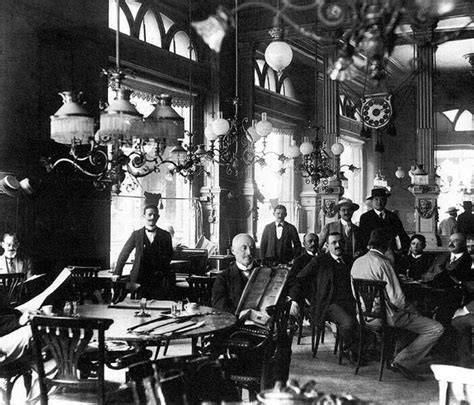
Budapest’s coffee houses, both grand and intimate, were centers of the city’s intellectual and cultural life-at the height of the Austro-Hungarian Empire there were some 500 coffee houses scattered throughout the city.
They served as common gathering places where philosophers, writers, artists, musicians, politicians, and the social elite met to share ideas and camaraderie, and also to work, all while eating luscious cakes accompanied by their preferred brew.
Indeed some of the writers, artists, and thinkers would spend the entire day at their favorite establishment, musing and writing at their regular tables with free ink and rolls of paper-known as “dog tongues”-often provided to them.
Folks from other walks of life frequented the city’s coffee-houses as well; popping in on a Sunday afternoon for a cup of coffee and slice of cake was a surefire way to catch up on the latest news and gossip around town.
Only a few of the myriad establishments that fueled this thriving coffee-house culture in turn-of-the-century Budapest were destined to survive the two world wars and Soviet Communist rule that followed in the 20th century.
Many were destroyed during World War II; and the Soviet Regime, after taking over in 1949, saw Budapest’s surviving coffee houses as hotbeds of underground resistance and anti-communist ideology.
Determined to thwart any political or cultural conspiracy, leaders of the Soviet Communist Party saw fit to close the city’s most popular establishments.
A ma-tradíciók újraéledése
Today, however, Budapest’s coffee-house culture is no longer forsaken, having experienced a renaissance in recent years.
A number of the city’s surviving historic coffee houses, tucked away in Neo-Renaissance palaces, 18th-century townhouses, or art-nouveau residential buildings, have been restored to their original splendor, along with their abundant offerings of fancy tortes and coffee, all in an effort to revive the dazzling coffee-house culture that was lost.
Today, to step back in time and experience the trappings and ambiance of this glorious by-gone era, one need only visit such historic establishments as the landmark, Centrál Kávéház (Est. 1887) and the opulent New York Kávéház (Est. 1894), both havens for writers, poets, journalists, and progressive thinkers during a golden age of Hungarian literature; the elegant and refined Gerbeaud Kávéház (Est. 1858), famous for its delicious tortes and once a favorite haunt of the Hapsburg royal family; or the more intimate Ruszwurm Cukrászda (Est. 1827), Budapest’s oldest coffee house that counted nobility among its loyal clientele, who frequented the café twice a week to indulge their sweet tooths.
A magyar torták versenyei
Delicious elegant tortes still rank high on Hungarians’ favorite sweet-tooth indulgences, so much so, that since 2007, the Hungarian Confectioner Craftsmen Corporation (HCCC), at the invitation of the Government of Hungary, has held an annual Cake of the Year contest to celebrate the most successful, talented, and upcoming confectioners and pastry chefs in Hungary and to promote culinary innovation.
In the first two rounds of the competition, the jury selects six cake entries anonymously, which they then re-taste, score, and make suggestions for their improvement.
In the final round, the six chosen confectioners make their creations live in front of the jury, who then taste and score the cakes once again and proclaim the 2 winners.
Once the jury makes its decision, which is presented in Hungary’s House of Parliament, the official recipes for the award-winning cakes, one in each of the two categories, are then shared with the professional confectioner and pastry community throughout the country.
The DCJ Stílusgyakorlat torta is the winner of the 2020 Cake of the Year, a reinterpretation of the classic dobostorta with a vertical layered look and a harmonious balance of meggy, csokoládé, and karamell.
A második helyezett a Füredi Krisztián által készített „Vadszüreti csábítás” torta lett, a harmadik helyezett a „Fürtös menyecske” torta.
Augusztus 19-től lehet megkóstolni a győztes tortákat, a Magyar Ízek Utcájában a Várkert Bazárban, és országszerte több száz cukrászdában.
Az új Mézes Krémes torta elegáns rétegei és karamellizált méze, a savanykás tejszín és egy kis narancshéj felfűzik a hagyományt a modern ízvilággal.
MI, MAGYAROK - Csodálatos tévedés - Dobostorta
Stop by the Bakehouse and grab a slice or, if you’re looking to serve six to eight discerning cake lovers, pick up the whole shebang!