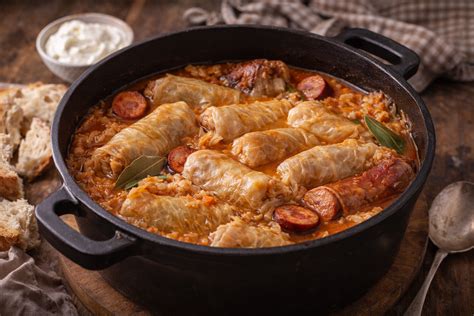
A Toltott Kaposzta (töltött káposzta) egy tápláló, házias étel, amely illendően házasság útján született.
A munkafolyamat úgy kezdődik, hogy a friss káposztaleveleket leforrázom. A darált húst -mára csirkét vettem- összekeverem rizssel, hagymával, pici fokhagymával, ízesítem só, bors, paprikával. Belecsomagolom a káposztalevelekbe, és máris indulhatnak főni, néhány füstölt csirkecomb társaságában. Persze teszek még bele paradicsomot, kaport, csombort, csíkokra vágott káposztát, és mihelyt elkészül, besűrítem. A habarás folyamatánál szem előtt tartandó, hogy ne legyen túl nagy a hőmérséklet- különbség (mármint a fazékban rotyogő eledel és a tejfölös massza között), ellenkező esetben ugyanis a végeredmény esztétikai értéke sérülhet. A hőmérséklet kiegyenlítését pedig a legkönnyebben úgy érhetjük el, hogy a forró káposzta levéből keverünk a habaráshoz, vagy esetleg egy kis hideg vizet öntünk a káposztára. E két ajánlat közül azt választjuk, amelyet úri jókedvünk éppen tartja. A főzésben egyébként az a jó, hogy vannak választási lehetőségeink, élhetünk velük, sőt teljesen új szabályokat is felállíthatunk. Tiszta demokrácia. Ami ugye a társadalom (családunk), nem túl jelentős számú, szavazati joggal rendelkező tagjainak hatalmából eredő politikai rendszer. Nálunk a demokrácia mellesleg a népnek a közügyekben való részvételére épül. Történetesen a konyhában is! Ami úgy néz ki, hogy én részt veszek a főzés, mosogatásban, fogyasztásban, a többiek meg segítenek ez utóbbiban De azért még nem nevezném magunkat fogyasztói társadalomnak. Mert a fogyasztói szemlélet az emberi kapcsolatok, a személyes értékek elsorvadásához vezet. Winter is the season for hearty Hungarian dishes. Cabbage is a favorite winter food that can be prepared in many delicious ways. Hungarian stuffed cabbage rolls are one of the most popular classics and it usually makes the Christmas and New Year's Eve menus in most homes. Preparation varies according to region and family, people prepare them not only on the stovetop, but also in the oven. Stuffed cabbage rolls come in many variations, the filling can be ground beef, pork, the sauce can be plain or tomato based and adding smoked meat and/or sausage will only enhance the flavor. True to their name, stuffed cabbage rolls are a dish of Eastern European origin, little bundles of cabbage leaves that have been stuffed and cooked with a mixture of ground meat (beef /pork), onions, paprika, rice, garlic and egg. Traditionally, Hungarian stuffed cabbage rolls are made with a pickled or fermented whole head of cabbage, which tastes like shredded sauerkraut, already soft and easy to work with. Place the cabbage rolls between 2 layers of rinsed and drained sauerkraut, pour water over and bake for 1.5 - 2 hours. This dish tastes best with sweet Hungarian paprika, I do not use smoked or spicy paprika at all. Note: paprika can go flat if it's old. Make sure you taste test your paprika before cooking with it in this recipe. Paprika, as it gets older, will lose its aroma and become less pungent. If your paprika doesn't have a strong flavor or has no smell, it's no longer good. You can certainly make ahead and freeze the stuffed cabbage rolls together with the sauerkraut, I always freeze them once they are cooked. Hungarian stuffed cabbage rolls are one of the most popular classics and it usually makes the Christmas and New Year’s Eve menus in most homes. Instructions Fill a large pot with water and bring it to a boil. Put the cabbage head in the water and slowly boil for about 30-35 minutes. Take the cabbage out and cool it. With a sharp knife carefully cut of 12-16 leaves without breaking them.In a medium pot, sauté the finely chopped onions in lard or vegetable oil over low heat, stirring frequently, until translucent. Do not let them burn. Salt lightly to help tenderize them. The onions should be cut into very, very small pieces. Add a small amount of water, if necessary, to prevent sticking to the pan.Remove the pot from the heat, add 3 tablespoons of sweet Hungarian paprika, stir well. Go by the color, if it is pale, rather orange than red, add a bit more paprika. Do not burn the paprika or it will become bitter.Combine the ground meat, egg, rice, garlic, half of the sautéed onions-paprika mixture, ground black pepper, and salt to taste. Form medium-sized balls. Flatten the cabbage leaves or remove the thick stalks from the center. Place 1 ball on each leaf, and roll it up firmly, folding the edges under. Place 1 ball on each leaf, and roll it up firmly, folding the edges under. Rinse the sauerkraut under running water and mix it with the second half of the paprika-onion mixture, the ground caraway seeds, the bay leaf and the flour. Spread half of it on the bottom of your pot. Place the cabbage rolls on top and cover them with the remaining sauerkraut. Pour water over. The water should not cover the sauerkraut, but when you press it with a wooden spoon, you should see the water.Cover with a lid and put it in the preheated oven (180°C/350F) and cook for about 1.5 - 2 hours, until the sauerkraut is tender. You can also test the meat filling, if the rice is tender, then it it done. Thanks For Sharing this amazing recipe. My family loved it. I will be sharing this recipe with my friends. That sounds wonderful! Dill weed is a lovely variation - it gives the sauerkraut such a fresh, aromatic flavor. Serving it with good bakery rye bread with caraway seeds must be absolutely perfect. When I make Beigli rolls the top splits and the filling swells out the sides. I will try this recipe and let you know how it goes. I discovered a better way to prepare the cabbage for this recipe. Freeze the head for at least 24 hours and then let it defrost in the fridge until completely thawed out. You can now core it and the leaves are already wilted and ready for stuffing. My dad’s family immigrated to the US from Hungary in about 1914 and I grew up watching my grandma make töltött káposzta. However, I misplaced her recipe. 1. 2. 1. I used two onions. The first onion I chopped finely and sautéed in the hot pan with a little salt, but I added a two cups of riced cauliflower, sautéing until lightly browned. I then added 1 ½ tbsp of Hungarian paprika, some dried Parsley, garlic and 1 tsp. 2. Since we don’t eat pork I used ½ lb of 88/12 hamburger and ½ lb of turkey sausage - the kind you buy in a chub. 4. This turned out heavenly and we both had to have seconds. I should add that, being unfamiliar with Hungarian food, my husband was quite sure he wasn’t going to like this, until he smelled it coming out of the oven. Doreen. I was so happy to find this site. My father’s mother and my aunts made this and I haven’t had it in years. I am making it today!!! Lots of sweet memories. Thank you! (my grandma used heavy cream instead of sour cream and stirred it in at the end, after it cooled enough. Hello Doreen, Hope this recipe worked for you. Please let me know how it turned out! I know it will turn out delicious but it will not look like anything on the picture because it has been impossible to get whole leaves off the cooked cabbage. All I have is rags of cabbage full of tears and holes. Thank you so much for reaching out and sharing your experience with the cabbage leaves. Getting whole leaves off the cooked cabbage can indeed be a bit tricky. One method to make it easier is to core the cabbage before boiling. After boiling, the leaves may come off more intact. If you’re still encountering difficulties, trying a different cabbage is a good idea. Each cabbage can have slightly different characteristics, and some might be more cooperative in providing intact leaves. Remember, even if the appearance isn’t perfect, the taste is what truly matters. Your effort and care in preparing the dish will surely shine through, and I hope it turns out wonderfully. Hello, making for the first time. When adding water to the pot for cabbage rolls, you want just enough so that it’s visible when you gently press down on the sauerkraut. Happy cooking! My grandmother and I made these for years. They came over from Hungary in 1912 to mine coal in West Virginia. I use tomato soup which less acidic than tomato juice. One can also grate the onion to make it very fine. Get the newest recipes and cooking club info delivered to your inbox! No spam. 2 darab füstölt oldalas (kb. A hagymát megdinszteljük, mikor meg van dinsztelődve, rá rakjuk a rizst és még keveset dinszteljük! Jöhet a piros paprika rá és kb. Összedolgozzuk és megtöltjük a káposzta levelet! A többi káposzta ami megmaradt összevágjuk kockákra! Fel teszünk egy fazékba kb. Mikor fő bele helyezzük a töltelékeket, kb. 4-5 kanál paradicsom pasztát, és borsika füvet! Lassú tűznél kb. Mikor a töltelék megfőtt, hozzáadjuk a sárga répát és a megmaradt meg vágott káposztát, és felöntjük kb. Elkészítjük a rántást és a levesűnket behabarjuk! Ízlés szerint készítjük sóval, étel ízesítővel és ecettel! Közzétéve: 2021. Erdélyben születtem, nőttem fel, és ki költöztünk Németországban kb 10 éve! Imádok sütni, főzni és mindent ami gasztronómia! 2014. Muffin torta! Toltott Kaposzta (Töltött Káposzta) is a traditional Hungarian dish. It is a hearty and healthy dish, which makes it very popular, especially in the winter months. It is made of cabbage leaves stuffed with a mixture of minced meat, rice, and spices. The name Toltott Kaposzta literally means stuffed cabbage. It comes from the word töltött which means filled and káposzta or cabbage. This dish has deep roots in Hungarian cuisine. The predecessor of stuffed cabbage in Hungarian cuisine was cabbage meat. Along with the Ottoman conquests, Turkish dishes came to this area, including sarma. However, Turkish sarma is wrapped in vine leaves, but in this area, sauerkraut was very popular. It didn’t take long that a new variant of sarma emerges, this time wrapped in sauerkraut. Again under the influence of local cuisine, people added dried meat to the dish. As with other traditional dishes, there are countless variations. Almost always the base is minced pork, sauerkraut, rice and smoked meat. However, depending on the region, you can also find variants with a combination of beef and pork, spices such as caraway seeds, barley instead of rice. Let’s mention that you can find similar dishes in the cuisines of Central Europe, Asia, the Levant, and even Brazil and Japan. Naturally, in each of these cuisines there are different variants, and sometimes even different names. Let’s just mention a few. In Bulgaria, Turkey, Serbia, Croatia, Bosnia & Herzegovina, and Albania a similar dish is called sarma. In Romania and Moldova, it is called sarmale. Interestingly, in some states, they are known as little pigeons. We got this Toltott Kaposzta recipe from a friend from Pecs, a city from in southern Hungaria.